


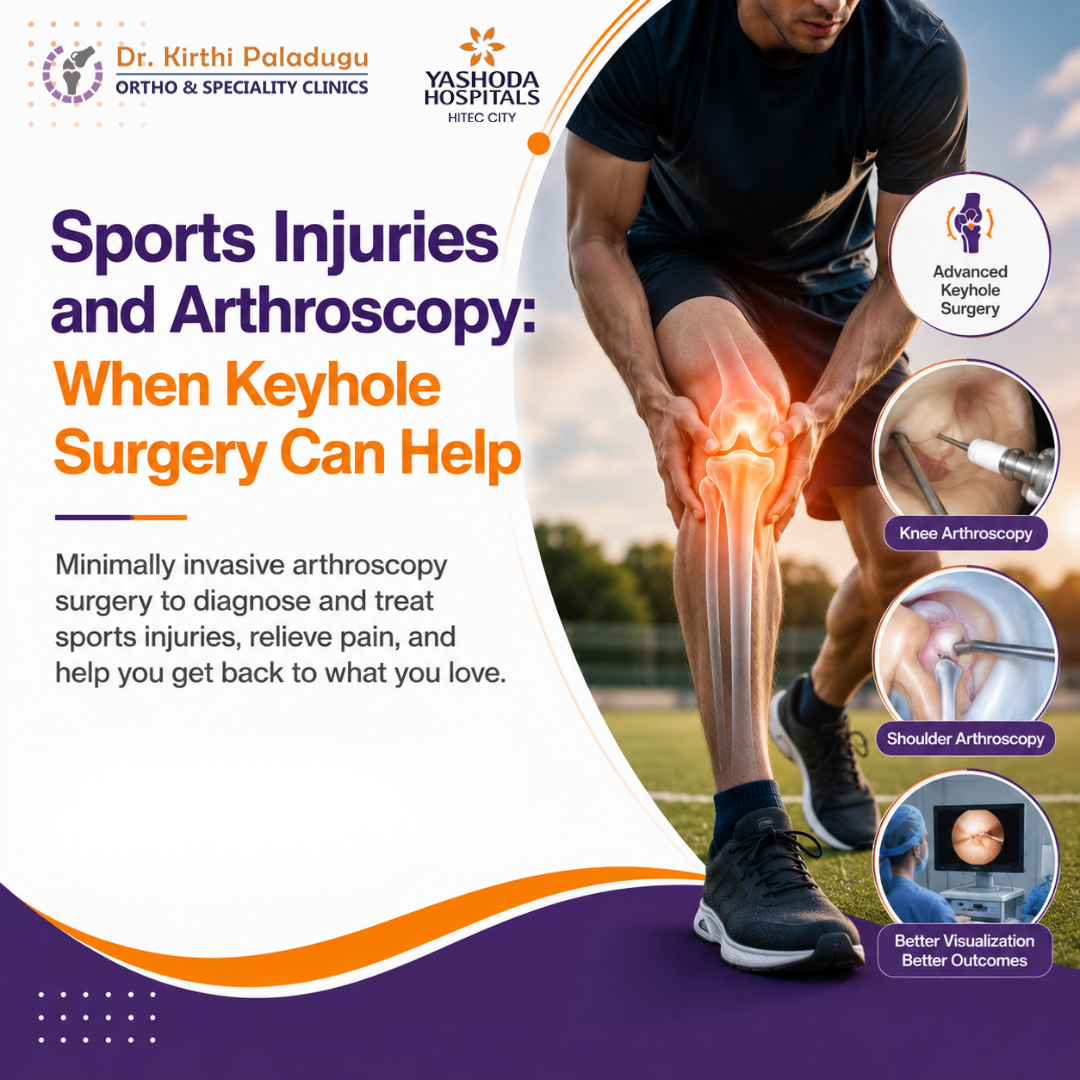
Sports Injuries and Arthroscopy: When Keyhole Surgery Can Help
Whether you're a professional athlete, a weekend football player, a gym enthusiast, or someone who enjoys an active lifestyle, sports injuries can happen unexpectedly. While many injuries improve with rest and physiotherapy, some continue to cause pain, swelling, instability, or limited movement.
When conservative treatments are no longer effective, arthroscopy surgery, often called keyhole surgery, may be recommended to diagnose and treat the underlying problem without the need for large incisions.
Dr Kirthi Paladugu specialises in advanced arthroscopic surgery, helping patients recover from sports injuries with personalised treatment plans focused on restoring movement and getting them back to the activities they enjoy.
What Is Arthroscopy?
Arthroscopy is a minimally invasive surgical procedure that allows an orthopaedic surgeon to examine and treat problems inside a joint using a tiny camera called an arthroscope.
Instead of making a large incision, arthroscopy surgery is performed through small keyhole-sized cuts, allowing specialised instruments to repair damaged tissues with minimal disruption to surrounding muscles and ligaments.
Because of its precision, arthroscopic surgery is widely used for diagnosing and treating sports-related joint injuries.
Which Sports Injuries Can Arthroscopy Treat?
Many sports injuries affect the soft tissues inside the joints, making them suitable for minimally invasive arthroscopy.
Common conditions include:
Knee Injuries
Knee arthroscopy is commonly performed for:
- Meniscus tear
- ACL injury
- Cartilage damage
- Loose bone or cartilage fragments
- Ligament injuries
- Knee locking or instability
For many active individuals, knee arthroscopy surgery helps restore joint stability while preserving healthy tissue.
Shoulder Injuries
Shoulder arthroscopy is frequently used to treat:
- Rotator cuff tear
- Shoulder impingement
- Labral tears
- Recurrent shoulder dislocation
- Shoulder instability
- Inflamed joint tissues
Because shoulder movement depends on several muscles and tendons working together, arthroscopy allows surgeons to repair damaged structures with excellent visual precision.
When Is Arthroscopy Recommended?
Your orthopaedic surgeon may recommend arthroscopy surgery if you experience:
- Persistent joint pain
- Swelling after a sports injury
- Knee locking or catching
- Shoulder instability
- Limited joint movement
- Repeated joint injuries
- Failure of physiotherapy or medications
- MRI findings showing repairable soft tissue damage
Not every sports injury requires surgery. A thorough clinical examination and imaging studies help determine whether arthroscopic surgery is the most appropriate treatment.
Benefits of Arthroscopic Surgery
Compared to traditional open surgery, arthroscopic surgery offers several potential advantages for suitable patients.
These include:
- Smaller incisions
- Less soft tissue damage
- Better visualisation of the joint
- Reduced postoperative pain
- Lower risk of wound complications
- Faster rehabilitation in many cases
- Smaller scars
- Earlier return to daily activities
The exact recovery depends on the type of injury and the procedure performed.
What Happens During Arthroscopy Surgery?
Although every procedure is different, a typical arthroscopy surgery usually involves:
- Detailed clinical evaluation
- Anaesthesia
- Small keyhole incisions around the joint
- Insertion of an arthroscope (tiny camera)
- Examination of the joint structures
- Repair or removal of damaged tissue using specialised instruments
- Closure of the small incisions
The procedure is commonly performed on the knee and shoulder but can also be used for other joints in selected cases.
Recovery After Arthroscopy
Recovery after arthroscopy varies depending on the injury, the joint involved, and the type of repair performed.
Early Recovery
Patients usually begin:
- Pain management
- Gentle joint movement
- Physiotherapy
- Walking with support if required
- Swelling control
Rehabilitation Phase
As healing progresses, rehabilitation focuses on:
- Restoring range of motion
- Muscle strengthening
- Balance training
- Improving joint stability
- Sport-specific rehabilitation
Returning to sports too early may increase the risk of reinjury, so rehabilitation should always follow the surgeon's advice.
Common Sports Injuries Treated With Arthroscopy
Some of the most common sports-related conditions treated using arthroscopy surgery include:
- ACL reconstruction
- Meniscus tear surgery
- Cartilage repair
- Rotator cuff surgery
- Shoulder stabilisation
- Removal of loose bodies
- Labral repair
- Ligament reconstruction
Because each injury is different, treatment is always personalised based on the patient's activity level and goals.
Who Is a Good Candidate for Arthroscopy?
You may benefit from arthroscopic surgery if you:
- Have persistent joint pain after a sports injury
- Experience repeated knee or shoulder instability
- Have a confirmed meniscus or ligament injury
- Have failed conservative treatment
- Wish to return to sports safely
Not every injury requires surgery. Some patients recover successfully with physiotherapy, activity modification, and rehabilitation.
Why Choose Dr Kirthi Paladugu?
Dr Kirthi Paladugu is an experienced orthopaedic surgeon in Hyderabad with expertise in advanced arthroscopy surgery and sports injury management.
His areas of expertise include:
- Knee arthroscopy
- Shoulder arthroscopy
- Sports injury treatment
- ACL reconstruction
- Meniscus tear surgery
- Rotator cuff surgery
- Ligament reconstruction
- Joint preservation procedures
Every patient receives an individualised treatment plan based on their diagnosis, lifestyle, and recovery goals.
Frequently Asked Questions
Is arthroscopy considered major surgery?
Although arthroscopy surgery is minimally invasive, it is still a surgical procedure and should be performed only when medically indicated.
Is arthroscopy painful?
Patients receive anaesthesia during the procedure. Mild pain and swelling after surgery are common and usually improve with medication and rehabilitation.
How long does recovery take after arthroscopy?
Recovery depends on the type of injury and procedure. Simple arthroscopy may recover within weeks, while ligament reconstruction or tendon repair can require several months of rehabilitation.
Can athletes return to sports after arthroscopy?
Yes. Many athletes return to sports after successful arthroscopic surgery, provided they complete their rehabilitation and receive medical clearance.
Is every sports injury treated with arthroscopy?
No. Many sports injuries heal with physiotherapy and rehabilitation. Arthroscopy is recommended only when conservative treatment is unsuccessful or when the injury requires surgical repair.
Get Back to the Sport You Love
A sports injury doesn't always mean giving up the activities you enjoy.
If persistent knee or shoulder pain is affecting your performance or daily life, consult Dr Kirthi Paladugu for a comprehensive evaluation and personalised treatment plan.
Book Your Arthroscopy Consultation Today
📍 Hyderabad
Consult Dr Kirthi Paladugu for Advanced Arthroscopy & Sports Injury Care