


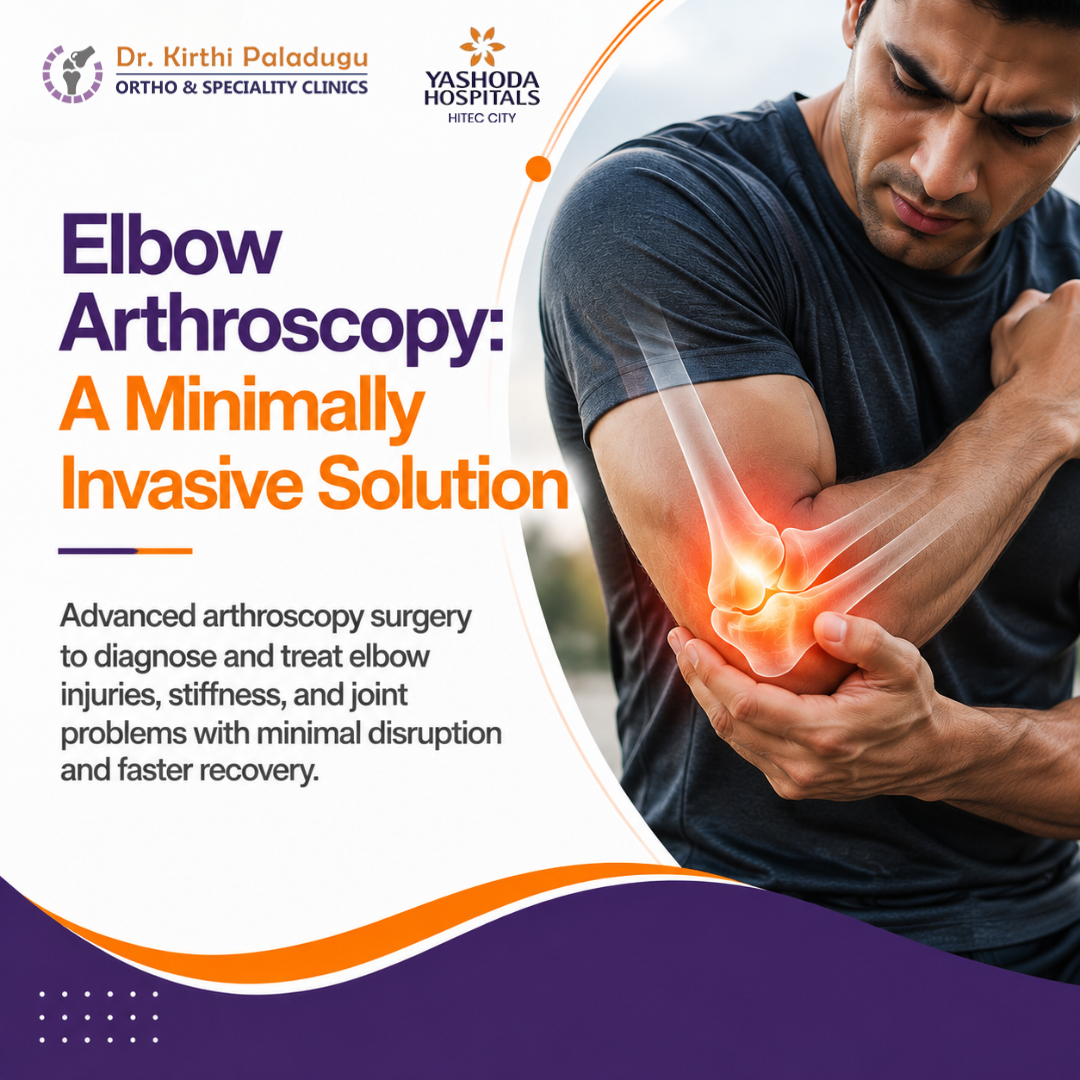
Elbow Arthroscopy: Restoring Movement Without Large Incisions
The elbow joint plays an important role in everyday activities such as lifting, writing, exercising, and performing routine tasks.
When injuries, arthritis, stiffness, or repeated strain affect the elbow, even simple movements can become painful and difficult.
Many people delay treatment because elbow pain may seem manageable initially. However, persistent pain, restricted movement, or repeated injuries may indicate an underlying joint problem that requires expert evaluation.
Elbow arthroscopy is an advanced minimally invasive procedure that helps diagnose and treat several elbow conditions through small incisions, allowing patients to recover with less tissue disruption compared to traditional open surgery.
What Is Elbow Arthroscopy?
Elbow arthroscopy is a minimally invasive surgical procedure where a small camera called an arthroscope is inserted into the elbow joint through tiny openings.
The camera provides a clear view of the internal structures of the elbow, including:
- Cartilage
- Ligaments
- Joint lining
- Bone surfaces
- Loose fragments inside the joint
During elbow arthroscopy surgery, specialised instruments can be used to treat problems such as damaged cartilage, loose bodies, stiffness, and certain ligament injuries.
The goal of elbow arthroscopic surgery is to reduce pain, improve movement, and restore elbow function.
When Is Elbow Arthroscopy Recommended?
An orthopaedic specialist may recommend elbow arthroscopy surgery when symptoms continue despite non-surgical treatments such as medication, physiotherapy, and activity modification.
Common reasons include:
- Persistent elbow pain
- Elbow stiffness
- Reduced range of motion
- Swelling around the joint
- Locking or catching sensation
- Sports-related elbow injuries
- Cartilage damage
- Loose bodies inside the joint
- Certain ligament injuries
A detailed evaluation helps determine whether arthroscopy is suitable for your condition.
Conditions Treated With Elbow Arthroscopy
1. Elbow Stiffness
Elbow stiffness can occur due to previous injuries, fractures, arthritis, or scar tissue formation.
Elbow stiffness treatment using arthroscopy may involve removing scar tissue, improving joint movement, and addressing the underlying cause.
2. Loose Bodies in the Elbow
Small pieces of cartilage or bone may become loose inside the joint and cause:
- Pain
- Locking sensation
- Reduced movement
- Swelling
During elbow arthroscopy, these loose fragments can be identified and removed.
3. Tennis Elbow
Tennis elbow is a common condition caused by irritation or degeneration of tendons around the outer elbow.
While many cases improve with non-surgical treatment, selected patients with persistent symptoms may require surgical intervention.
A proper diagnosis helps determine the right tennis elbow treatment approach.
4. Elbow Ligament Injuries
Sports activities involving repetitive throwing, lifting, or forceful movements can place stress on elbow ligaments.
An elbow ligament injury may cause:
- Pain during activity
- Weakness
- Instability
- Reduced sports performance
Treatment depends on the severity of the injury and the patient’s activity goals.
Benefits of Elbow Arthroscopy Surgery
For suitable patients, minimally invasive elbow surgery may offer several advantages:
- Smaller incisions
- Less soft tissue damage
- Better visualisation of the joint
- Reduced postoperative discomfort
- Faster recovery compared to some open procedures
- Earlier movement and rehabilitation
However, the success of surgery depends on accurate diagnosis, surgical technique, rehabilitation, and the condition being treated.
What Happens During Elbow Arthroscopy Surgery?
A typical elbow arthroscopy surgery involves:
1. Evaluation and Planning
The surgeon reviews symptoms, physical examination findings, and imaging reports.
2. Small Incisions
Tiny openings are created around the elbow joint for the camera and specialised instruments.
3. Joint Examination and Treatment
The surgeon examines the joint and treats the identified problem, such as removing loose tissue or addressing damaged structures.
4. Recovery and Rehabilitation
After surgery, a structured rehabilitation plan helps restore movement and strength.
Recovery After Elbow Arthroscopy
Recovery after arthroscopy surgery varies depending on the condition treated and the type of procedure performed.
Early recovery may include:
- Pain and swelling management
- Gentle elbow movement exercises
- Physiotherapy
- Gradual strengthening exercises
The rehabilitation process focuses on:
- Restoring range of motion
- Improving elbow strength
- Returning to daily activities
- Safely returning to sports when appropriate
Following rehabilitation instructions plays an important role in achieving good outcomes.
When Should You See an Elbow Pain Specialist?
You should consider consulting an elbow pain specialist if you experience:
- Elbow pain lasting several weeks
- Difficulty bending or straightening your arm
- Pain affecting work or sports activities
- Repeated elbow injuries
- Swelling or stiffness
- Weakness in the arm or grip
Early evaluation can help identify the cause of pain and prevent worsening joint problems.
Why Consult Dr Kirthi Paladugu for Elbow Problems?
Dr Kirthi Paladugu is an experienced orthopaedic surgeon in Hyderabad specialising in arthroscopy, sports injuries, and joint-related conditions.
His expertise includes:
- Elbow arthroscopy
- Knee arthroscopy
- Shoulder arthroscopy
- Sports injury treatment
- Ligament injuries
- Joint preservation procedures
With a patient-focused approach, Dr Kirthi evaluates each condition carefully and recommends treatment based on the patient's symptoms, lifestyle, and recovery goals.
Frequently Asked Questions
Is elbow arthroscopy a major surgery?
Elbow arthroscopy is a minimally invasive procedure, but it is still a surgical treatment that should be performed only when clinically required.
How long does recovery take after elbow arthroscopy?
Recovery depends on the condition treated and the procedure performed. Some patients return to daily activities within weeks, while more complex repairs may require longer rehabilitation.
Can elbow arthroscopy treat stiffness?
Yes. Elbow arthroscopy can help treat certain causes of stiffness, such as scar tissue, loose bodies, and joint abnormalities.
Is elbow arthroscopy better than open surgery?
For suitable conditions, elbow arthroscopic surgery may provide benefits such as smaller incisions and reduced tissue disruption. The right approach depends on the patient's diagnosis.
Can sports injuries of the elbow be treated without surgery?
Many elbow injuries improve with rest, physiotherapy, and rehabilitation. Surgery is considered when symptoms persist or when structural damage requires repair.
Restore Elbow Movement With Expert Care
Persistent elbow pain should not limit your work, sports, or daily activities.
If you are experiencing elbow pain, stiffness, or reduced movement, consult Dr Kirthi Paladugu for an expert evaluation and personalised treatment plan.
Book Your Elbow Consultation Today
📍 Hyderabad
Dr Kirthi Paladugu | Orthopaedic Surgeon | Arthroscopy & Sports Injury Specialist