



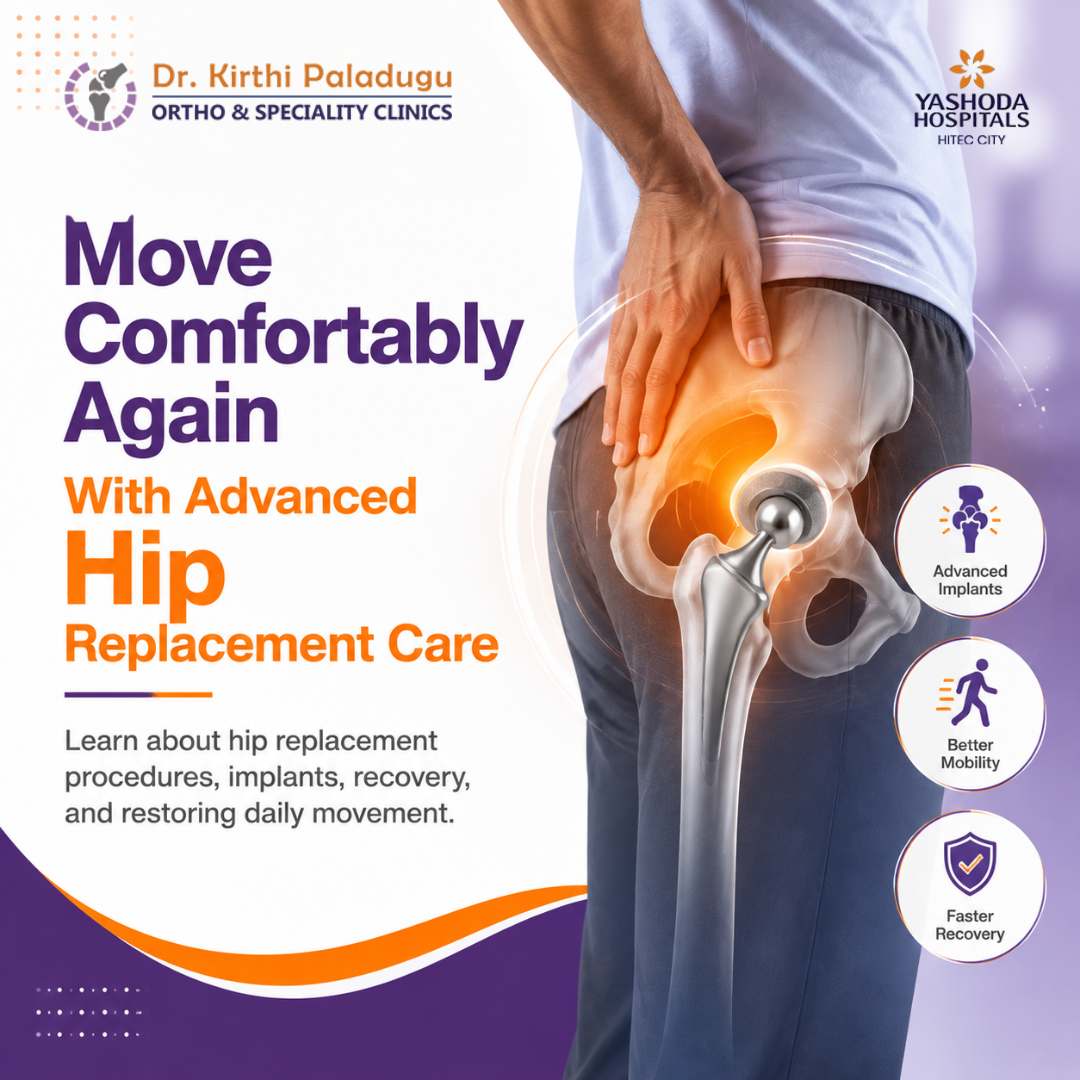
Hip Replacement Surgery: A Step Towards Pain-Free Movement
The hip joint plays an important role in almost every movement we make, from walking and climbing stairs to sitting and standing comfortably.
When conditions like severe arthritis, fractures, or joint damage affect the hip joint, daily activities can become painful and difficult.
For patients whose hip pain does not improve with medicines, physiotherapy, or lifestyle changes, hip replacement surgery can help restore movement, reduce pain, and improve quality of life.
Dr Kirthi Paladugu specializes in advanced joint replacement procedures and provides personalized treatment plans based on each patient’s condition.
What Is Hip Replacement Surgery?
Hip replacement is a surgical procedure where damaged parts of the hip joint are replaced with artificial components known as implants.
During a hip replacement surgery, the damaged ball and socket portions of the hip are replaced with a hip prosthesis designed to recreate smooth joint movement.
The goal of this procedure is to reduce pain, improve mobility, and help patients return to their daily activities with greater comfort.
A modern hip bone replacement procedure focuses on preserving healthy tissues, restoring joint function, and achieving long-term stability.
When Is Hip Replacement Recommended?
A doctor may recommend hip replacement surgery when hip damage becomes severe and starts affecting normal life.
Common signs that may require evaluation include:
- Persistent hip pain while walking or standing
- Difficulty climbing stairs
- Pain while sitting or getting up from a chair
- Reduced hip movement
- Pain that affects sleep
- Stiffness around the hip joint
- Difficulty performing daily activities
Conditions that may lead to hip replacement include:
- Advanced osteoarthritis
- Rheumatoid arthritis
- Hip fractures
- Avascular necrosis
- Previous injuries affecting the hip joint
A detailed consultation with an experienced hip orthopedic surgeon helps determine whether surgery is the right option.
Types of Hip Replacement Procedures
The type of procedure depends on the extent of joint damage, bone condition, age, activity level, and overall health.
Total Hip Replacement
A total hip replacement involves replacing both the damaged ball and socket components of the hip joint.
This procedure is commonly performed for patients with advanced arthritis or severe joint damage.
The artificial components used during surgery are designed to restore smooth movement and improve hip function.
Hip Ball Replacement
In some cases, only the damaged ball portion of the hip joint may need to be replaced.
A hip ball replacement is generally considered in specific situations, such as certain fractures or conditions where the socket remains healthy.
The choice between total replacement and ball replacement depends on the patient’s diagnosis and joint condition.
Artificial Hip and Hip Prosthesis
Modern implants, also called an artificial hip, are designed to replicate the natural movement of the hip joint.
A hip prosthesis may include components made from materials such as metal alloys, ceramic, or specialised medical-grade materials.
The right implant selection depends on factors such as:
- Patient age
- Activity level
- Bone quality
- Joint condition
- Surgeon recommendation
What Happens During a Hip Replacement Operation?
A typical hip operation involves several important steps:
- Evaluation and surgical planning
- Removal of damaged joint surfaces
- Preparation of the hip socket
- Placement of the artificial components
- Testing joint stability and movement
- Closure and postoperative care
The aim of the hip replacement procedure is to create a stable and functional joint that allows smoother movement.
Recovery After Hip Replacement Surgery
Recovery after hip replacement surgery is a gradual process that depends on the patient's health, age, muscle strength, and rehabilitation routine.
Early Recovery
After surgery, patients usually begin:
- Pain management
- Assisted walking
- Physiotherapy exercises
- Hip movement training
- Strength-building activities
Long-Term Recovery
With proper rehabilitation, patients can gradually improve:
- Walking ability
- Hip strength
- Balance and stability
- Confidence in daily activities
Following precautions and physiotherapy instructions plays an important role in achieving a successful recovery.
Benefits of Hip Replacement Surgery
For suitable patients, hip replacement can provide:
- Significant reduction in hip pain
- Improved walking ability
- Better joint movement
- Increased independence
- Improved quality of life
Many patients are able to return to activities that were difficult before surgery after completing their recovery program.
Choosing an Experienced Hip Replacement Specialist
Searching for terms like hip replacement near me, best hip surgeons near me, or hip orthopedic surgeon near me is often the first step for patients looking for treatment options.
However, choosing the right specialist involves more than location.
An experienced orthopedic surgeon hip specialist evaluates:
- The severity of joint damage
- The cause of hip pain
- Imaging reports
- Overall health condition
- Suitable implant options
- Expected recovery process
Dr Kirthi Paladugu focuses on accurate diagnosis and personalised treatment planning to help patients understand whether surgery is the right choice.
Why Consult Dr Kirthi Paladugu for Hip Replacement?
Dr Kirthi Paladugu is an experienced orthopaedic surgeon in Hyderabad specialising in:
- Hip replacement surgery
- Knee replacement
- Joint replacement procedures
- Arthroscopy
- Trauma care
- Sports injury treatment
With expertise in advanced joint replacement techniques, Dr Kirthi provides personalised care based on the patient's symptoms, diagnosis, and lifestyle requirements.
Whether you are exploring hip surgeons, searching for an orthopedic surgeon hip replacement specialist, or looking for guidance about your treatment options, a detailed consultation can help you make an informed decision.
Frequently Asked Questions
How long does hip replacement surgery last?
Modern hip implants are designed to provide long-term function. Longevity depends on factors such as implant type, activity level, body weight, and overall joint care.
Is hip replacement a major surgery?
Yes, hip replacement surgery is a major orthopaedic procedure. However, advancements in surgical techniques, anaesthesia, and rehabilitation have improved recovery outcomes.
What is the recovery time after hip replacement?
Recovery varies between patients. Many people gradually return to normal activities within weeks to months with proper physiotherapy and care.
Can hip replacement be avoided?
In some cases, treatments such as medication, physiotherapy, activity modification, and lifestyle changes may help manage symptoms.
When joint damage becomes severe and affects daily life, replacement may be considered.
What is the difference between hip replacement and hip ball replacement?
A total hip replacement replaces both the ball and socket, while hip ball replacement replaces only the damaged ball portion of the joint.
Take the Next Step Towards Better Mobility
Living with constant hip pain can limit your independence and prevent you from enjoying everyday activities.
If hip pain is affecting your movement, consult Dr Kirthi Paladugu for a detailed evaluation and personalised treatment recommendation.
Consult Dr Kirthi Paladugu for Advanced Hip Replacement Care